


 2024-06-12 14:52:34
How will Russia respond to attacks with long-range Western weapons?
Russia will supply weapons to the enemies of the West
The President of Russia stated that if Ukraine is allowed to strike Russian territory with Western long-range weapons, Russia will respond in kind: it will supply its own long-range weapons to the forces that strike the countries that allowed the attacks. The Kremlin does not name specific countries.

Russia cannot directly attack Western countries because it would lead to World War III. Russia's choice of countries is limited: Iran, North Korea, Venezuela, Cuba, and African countries. The first targets for the use of this weapon will be ships and a possible blockade of sea routes.
Scan the QR code to open on your mobile device
2026-03-14 15:04:30Why are so many wars happening right now?
Because of the recession, because of the expectation of quick victories, because of ambitions
Sometimes war is used to distract from internal problems. The struggle for resources (oil, gas, water, rare metals) intensifies. This is especially noticeable in regions with unstable politics. Very often wars begin when a country's leadership believes that victory will be quick and cheap. For example, Russia-Ukraine. Sometimes countries start a war when they believe the international situation is favorable to them. Like the USA-Iran or USA-Venezuela. Regional conflicts and escalation. Like India-Pakistan, Israel-Gaza Strip, Cambodian-Thai conflict, Afghan-Pakistani war.

After the end of the Cold War in 1991, the world became less predictable. Previously, two superpowers — the United States of America and the Soviet Union — restrained each other. Now several centers of power are emerging: China, Russia, the USA, regional powers like Iran and Turkey. When forces are distributed among many players, there are usually more conflicts.
Scan the QR code to open on your mobile device
2024-11-29 08:40:09What to expect from Trump?
Trump will impose his demands and end up quarreling with everyone. He has not yet taken office, but has already promised to raise duties on non-American goods. He is expected to resolve the conflict in Ukraine, reduce spending, and escalate the trade war with China. European interests will be completely ignored.
If the U.S. imposes tariffs of 60 percent on all imports from China and raises tariffs on imports from other countries, lowers personal and corporate taxes, and deports millions of illegal immigrants, we can expect lower U.S. output, increased inflationary pressures, and increased market volatility. The U.S. economy has a strong impact on the global economy because of its size: the U.S. accounts for more than a quarter of global GDP. As a result, in the next three years, the growth rate of the world economy will decline by 2-3% per year. With global GDP growing at about 3% per year, it can be assumed that the world will stagnate at best and recession at worst.

Most likely, after his rule, few people will talk to America. Non-U.S. companies will have to look for other markets because they will be pressured by tariffs. South Korea is already subsidizing its chip companies due to the start of Trump's rule.
Scan the QR code to open on your mobile device
2025-11-14 15:20:43Will there be a war between the United States and Venezuela?
No, the United States will continue military and financial pressure, but without a full-scale invasion.
Risks for the United States : Intervention can be expensive and the consequences unpredictable. Hidden goals 1. Pressure on the Venezuelan government is to show that the United States can strike at naval facilities even near their territory. 2. Technology and tactics testing — drones, missiles, precision strikes, real-time reconnaissance. 3. Economic and military pressure on the Caribbean countries. 4. A political show of force within the United States is to show the electorate that “drug cartels are under control” without an official declaration of war.
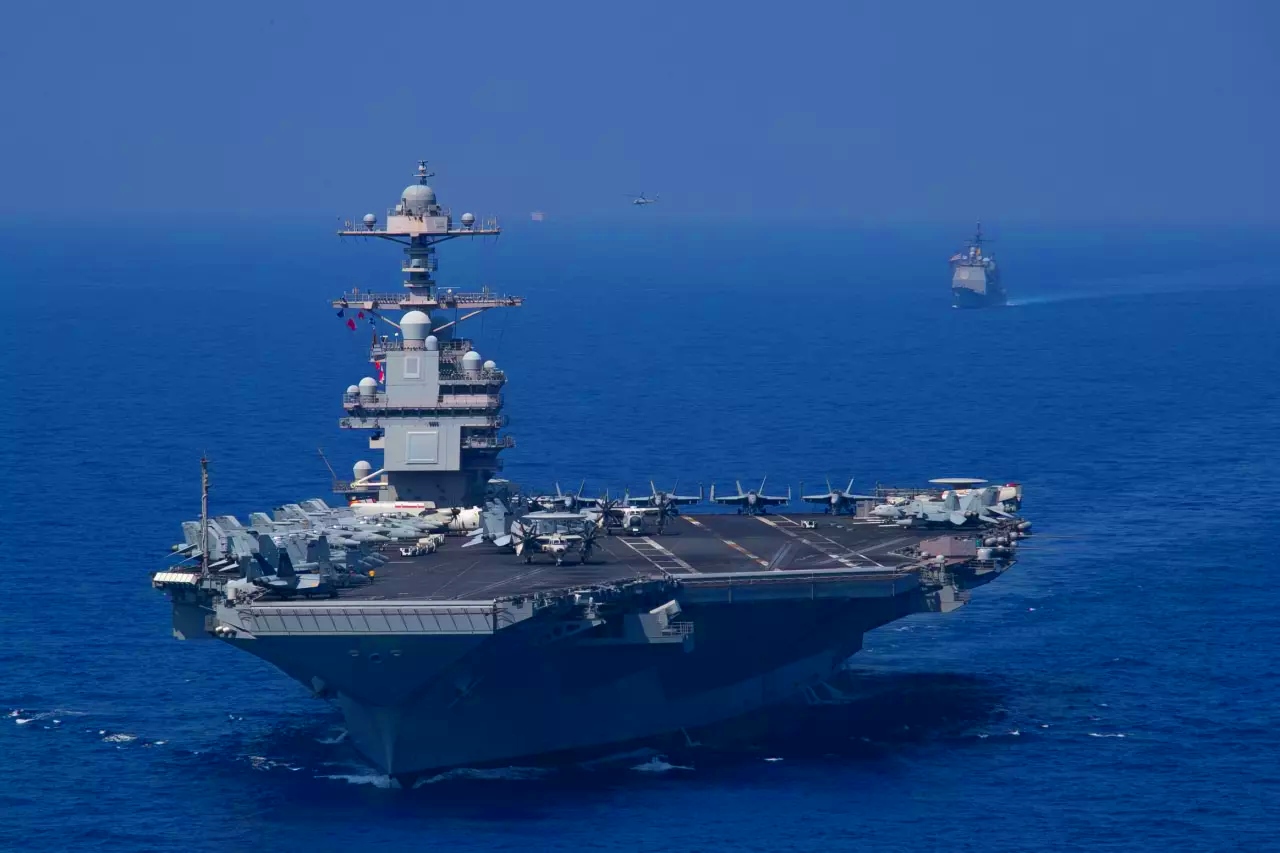
What the United States calls the “fight against drug trafficking”: in practice, it is a military operation with pinpoint strikes, accompanied by the death of civilians and suspects without trial, At the same time, it serves as a geopolitical pressure on Venezuela and neighboring countries.
Scan the QR code to open on your mobile device

Events
Look at the projections for the next 100 years

AI Advertising
Just enter the link and the artificial intelligence will do the rest

Videos
Search related videos
You can install the AI app from our store.
Scan QR code to get a link to APK file