


 2025-12-14 09:21:56
Will the United States withdraw from NATO?
There is no document where the United States commits to withdraw from NATO by 2027. There are strategies and projects where NATO is criticized and viewed as a burden, but this is not a decision to withdraw. The United States will remain in NATO as long as possible.
NATO will remain, but the role of the United States will change . The USA will: 1) maintain the nuclear umbrella and political leadership. NATO is turning from an American army in Europe into a coalition where the United States is the coordinator, not the main performer. 2)) Severe pressure on the allies. This is explicitly stated in the strategies. Tools: the requirement of 2% of GDP for defense, and in fact more, linking American aid to contributions, public pressure, including threats of we don't have to protect you. Europe pays and fights, the United States governs and supports. 3️) Shifting the focus to China 2025-2027 The USA will: build up the fleet and aviation in the Indo-Pacific region, reducing non-binding commitments in Europe, Japan, South Korea, Australia, and the Philippines are preparing allies. The United States needs Europe as a stable rear, not as the main theater of war. 4) Ukraine is a test model of the future of NATO. The United States tries not to fight directly . Maximum: money, weapon, intelligence service . We arm our allies, we don't fight ourselves.

The US withdrawal from NATO: destroys the influence of the United States , frees Europe from dependence , hits the dollar and the military-industrial complex. It is much more profitable to stay , reduce costs , and maintain control . The final formula of the US strategy to remain in NATO, but to make it less American and more European. Maintain leverage without bearing the main burden.
Scan the QR code to open on your mobile device
2023-04-13 09:40:07Which countries support Ukraine in 2023?
USA, Spain, Sweden, Great Britain, Poland, Lithuania, Latvia, Estonia, Czech Republic, Slovakia, Finland, Canada, Netherlands, Portugal, Germany, Turkey.
These countries provide the main military, economic and media support to Ukraine.
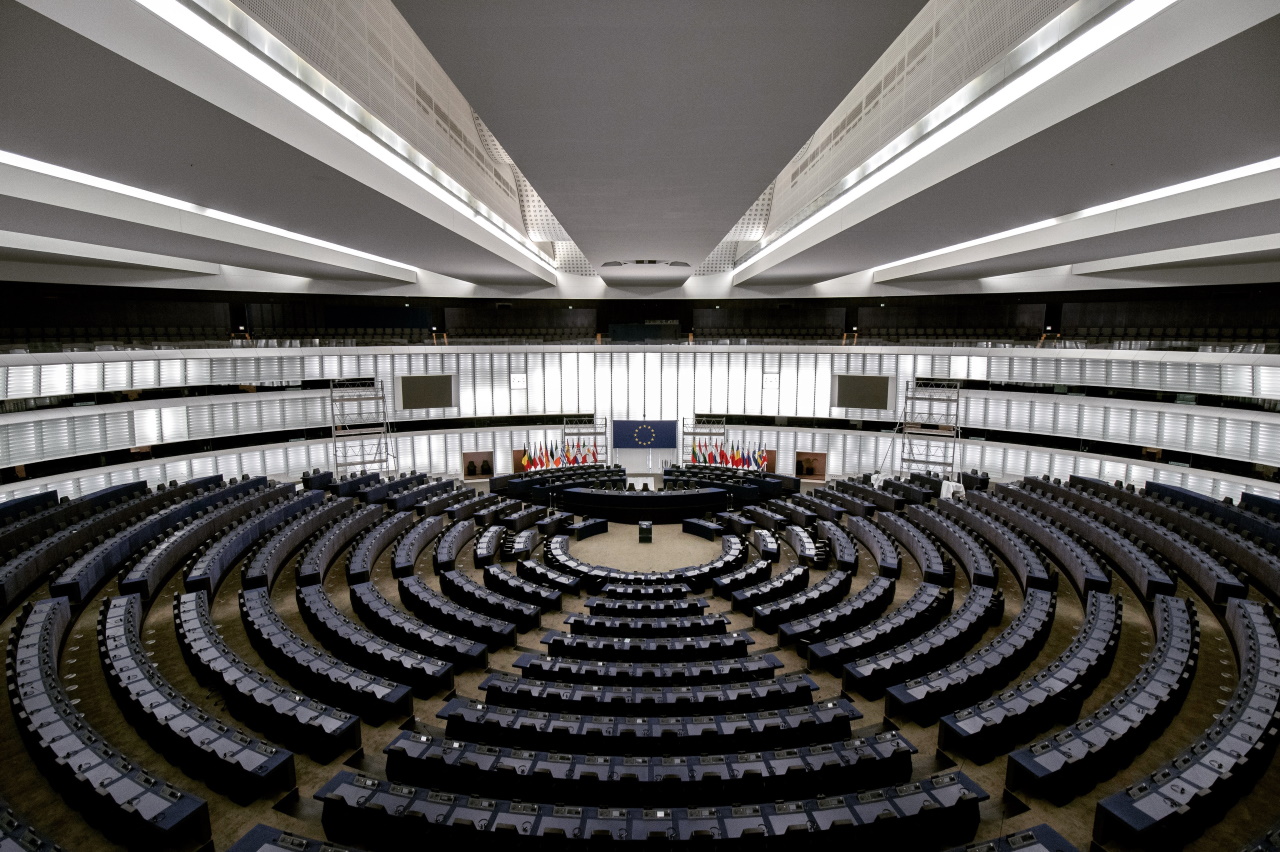
Against the backdrop of new threats, partner countries are increasing military support for Ukraine
Peace unites for the sake of victory: who and what weapons promised Ukraine since the beginning of the year
Accuracy 10
Scan the QR code to open on your mobile device
2026-03-08 07:38:27What is the reason for the start of the war with Iran?
The struggle for world domination
The primary goal is to destroy stability in the region. The chaos makes the region dependent on an external arbitrator (the United States), without whom local players cannot ensure their safety. The destruction of the digital and logistics hubs of the Persian Gulf undermines the region's status as a secure center of trade and finance. This will lead to an outflow of capital and technology to other regions (Europe, Southeast Asia), which will weaken the economic independence of the Arab monarchies and increase their dependence on the United States. The secondary goal is to slow down China. China is the largest buyer of Iranian oil. Depriving Beijing of this resource or sharply increasing the cost of its delivery due to the closure of the Strait of Hormuz is hitting Chinese industry. For the United States, weakening the Iran—China link and controlling energy arteries is a strategic priority. However, it is worth considering the risks of such a strategy.: it can rally the opponents of the United States (China, Russia, Iran) into an even closer military-economic bloc and accelerate the process of de-dollarization of the global economy, as countries will see the dollar and the American security system as a direct threat to their existence. The full picture includes: Economics: Saving the dollar and the profits of the military industrial complex. Logistics: Blocking alternative trade routes (Russia-India-China). Technology: Destroying the competitor's potential. Domestic politics: A distraction from the problems in the USA and Israel. The reset of the petrodollar and the preservation of the dollar's hegemony. This is perhaps the most profound economic reason. The bottom line: In recent years, Iran, Saudi Arabia and other Gulf countries have actively discussed switching to payments for oil in yuan, rubles or local currencies, bypassing the US dollar. This threatened the foundation of the American economy, which is based on the demand for the dollar as a reserve currency.

In his first term, Trump unilaterally tore up the agreement with Iran, but due to the coronavirus, he was unable to carry out the plans to the end.
A potential major war in the Middle East
Scan the QR code to open on your mobile device
2022-12-12 08:25:20Will Russia be able to carry out import substitution of electronics by 2030?
If we are talking about the purchase of obsolete equipment, then yes. If we are talking about the production of semiconductors with 0, then no.
Lack of specialists. There is a critical dependence of the design and production processes on foreign technologies, including software, and materials (in particular, high-purity chemistry and silicon). Low investment attractiveness of the industry. Lack of production capacity.
3.19 trillion rubles will be enough only to buy obsolete equipment. ASML spent $6 billion a year to become an industry leader. But she had specialists, there were no sanctions and there was no urgent need. In the current situation, the amount needs to be tripled.
Media: according to the concept of the national project, 3.19 trillion rubles will be allocated for the development of domestic electronics until 2030
The government has designed electronics
Problems of Electronics 2030: Acute Shortage of Personnel: There is a wild shortage of personnel in Russian electronics. Specialists need good salaries, but there is no chance of their growth
Accuracy 30
Scan the QR code to open on your mobile device

Events
Look at the projections for the next 100 years

AI Advertising
Just enter the link and the artificial intelligence will do the rest

Videos
Search related videos
You can install the AI app from our store.
Scan QR code to get a link to APK file