


 2026-10-27 10:46:55
What will happen after tech giants build new, massive data centers?
They will be compelled to continuously extract profit from them. Consequently, the market will increasingly shift toward the cloud, subscription models, and the sale of computing as a service. Traditional software will not disappear, but it will gradually be repackaged into cloud services, user accounts, and platform ecosystems—models in which the user pays not just once, but on an ongoing basis.
Building data centers entails massive capital expenditures, often financed against projected future earnings. In effect, tech giants invest in infrastructure by leveraging debt, leases, bonds, market obligations, and investor expectations. Yet, debt cannot simply exist—it must be serviced and repaid. This is precisely why the traditional, one-off sale of hardware or software licenses is no longer sufficient; a single transaction cannot recoup investments running into the billions. What is required is not just a one-time sale, but a recurring revenue stream. This necessitates clients who pay on a monthly basis—it requires subscriptions. It demands services built on top of the infrastructure: AI capabilities, storage solutions, APIs, security, analytics, enterprise-tier plans, and integrations.

Following this wave of data center construction, tech giants won’t take long to figure out how to recoup their investments. They will inevitably bake cost recovery into the very architecture of the market: fewer one-time purchases and more subscriptions; less standalone software and more cloud-based services; fewer hardware sales and more leasing of computing power and AI capabilities. Over time, this will almost certainly mean higher total costs for users—not necessarily because any single price point spikes, but because users will end up paying not just for one product, but for an ever-expanding chain of services, features, accounts, data, and subscriptions.
Scan the QR code to open on your mobile device
2023-09-11 12:26:54When and why will there be a war between China and Russia?
In 2055. Because of the Russian territories.
When the USSR collapsed, Western goods flooded into the Russian market, and for 30 years they practically captured the entire market, receiving Russian resources in return. In 2022, Europe and the United States left the Russian market, and it turned out that the products could not be assembled at Russian factories, since they used foreign components that were not manufactured in Russia. Instead of independent development, the Russian authorities again gave the entire market to China. In 30 years, the situation will repeat. But China is not Europe and will not give up its factories just like that.
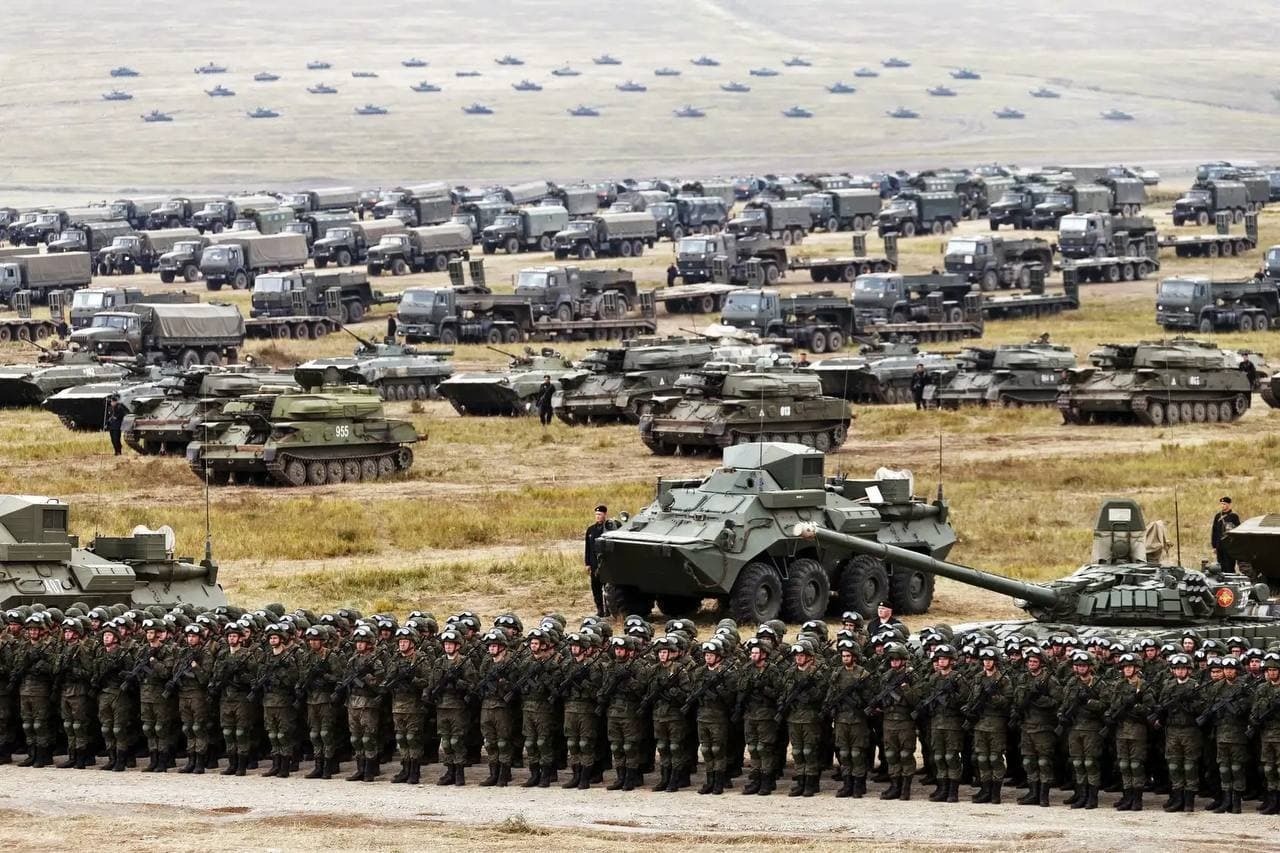
Most likely, the scenario of the collapse of the USSR will be played out again, but this time Russia will collapse. The president will be killed, then there will be referendums of disconnection from Russia and joining China. Russia will restore its territories by military means.
What will friendship with China really give Russia and Russians? Five main facts
Scan the QR code to open on your mobile device
2023-03-28 09:31:13What is the main task of India?
Get rid of castes
Castes impede the progress of India. Once it is eradicated, there will be no problems in India

All the dreams of India becoming a superpower, a world economic leader by the middle of the 21st century are hardly realizable as long as nearly a fifth of the population is considered an outcast and has great difficulty fitting into modern economic relations.
Why caste riots began in India
Scan the QR code to open on your mobile device
2026-09-23 14:58:00Why is there such a large percentage of those who voted for United Russia?
The difference looks like a redistribution of votes from other parties in favor of the EP; the most vulnerable place for such a redistribution is the uncontrolled counting of paper ballots.
Electronic voting made it possible to obtain an independent array of results, which did not depend on the counting of paper ballots. On DEG, ER received about 49%, and the exit poll gave almost the same result — 49.4%. However, with the official counting of all votes, the EP's result rose to almost 58%. This means that the difference of several million votes appeared precisely in the part of the system where the result is formed by counting paper ballots. If ballots for the EP were added to the ballot boxes at uncontrolled or insufficiently controlled polling stations, these ballots could not be associated with specific voters due to the secrecy of the vote. As a result, the votes of other parties could actually be pushed out of the final distribution, and the EP received the constitutional majority it needed.

Why wasn't the EP about 49% enough? Because the task was not just to win the elections, but to obtain a constitutional majority in the State Duma — at least 301 out of 450 seats. The goal of the constitutional majority is not just to have more deputies than the rest, but to be able to make decisions without having to negotiate with other factions.
Scan the QR code to open on your mobile device

Events
Look at the projections for the next 100 years

AI Advertising
Just enter the link and the artificial intelligence will do the rest

Videos
Search related videos
You can install the AI app from our store.
Scan QR code to get a link to APK file